Gallicianò, Calabria, Italy
The road climbed through dust and rock, lined with prickly pear.
A man passed on a Vespa. A white sheepdog was wedged between his knees, barking, as if the road were his.
At a lookout point, light caught a small Byzantine mosaic set by the roadside.
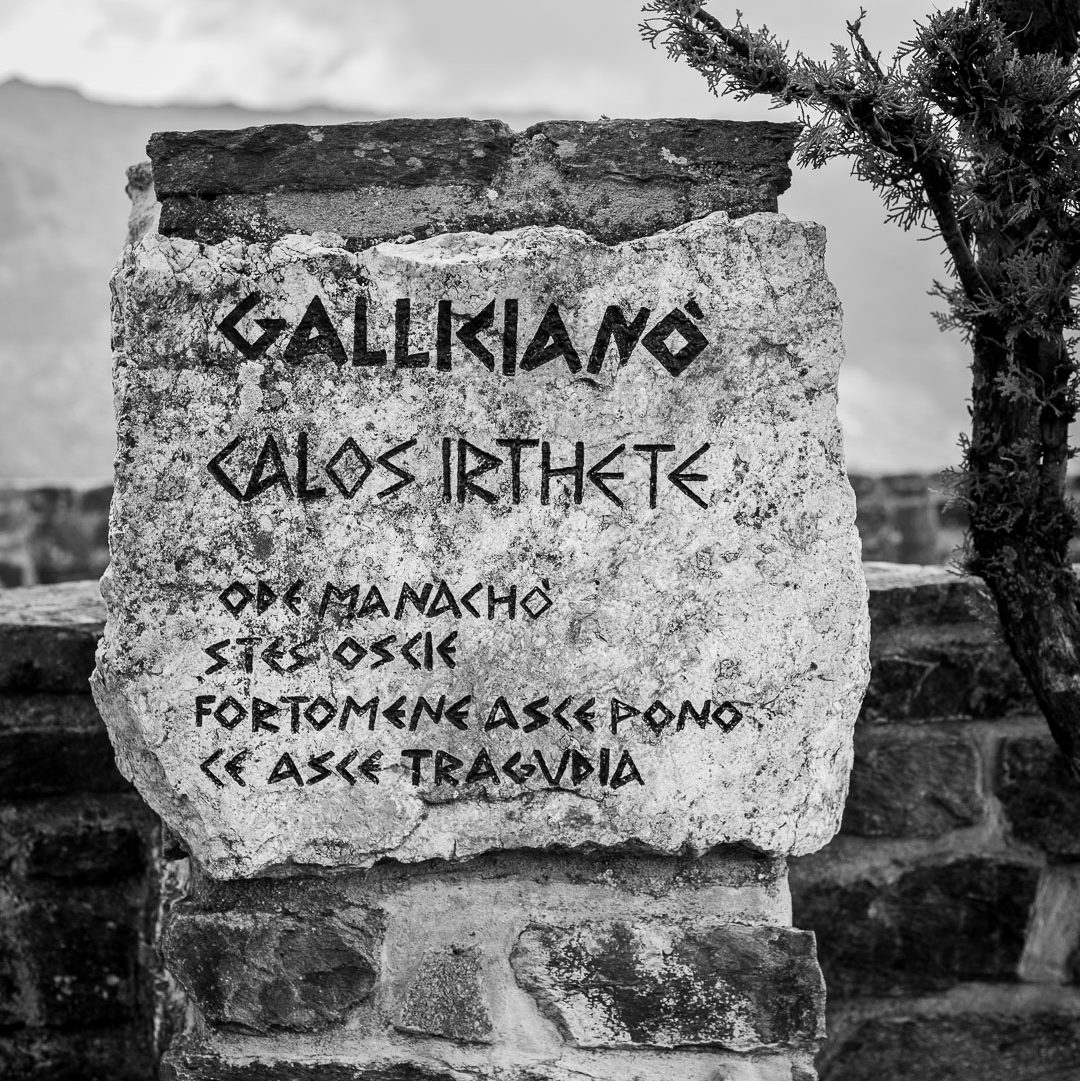
Next to it, an inscription I could not read.
I followed the letters with my eyes.
Gallicianò sat on a small plateau among oak and olive trees, high in the Aspromonte.

In the village square, I ordered a coffee. The barista nodded and said, “Wait for Mimmo. He has the church keys.”
I waited.
As we walked up the narrow streets, Mimmo told me that Calabrian Greek had once been spoken across the region.
“Here,” he said, “we all grew up with it.”
He paused. “Grecanico.” Then more quietly: “People on the coast laughed at us.”
At the top of the village, the Orthodox church caught the light. Mimmo rang the bell five times. He said it was for good luck.
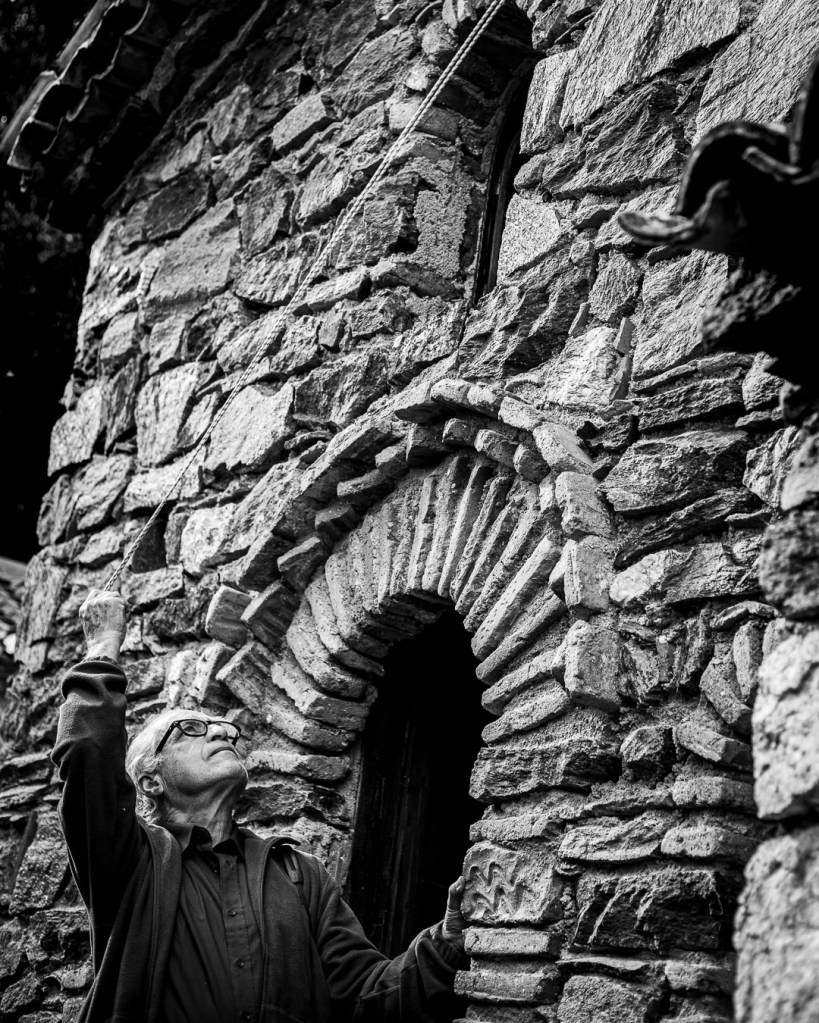
Inside, the air smelled of wax and stone. The space was silent.
“We were Orthodox,” he said, almost to himself. “But we didn’t know it.”
From a nearby house came the smell of fresh bread. An old woman dressed in black climbed the steps carrying a bundle of branches. I watched her until she turned the corner.
“Only thirty of us are left,” Mimmo said, looking away.
On the way back, I stopped again at the lookout.
I found the translation on my phone:
Welcome.
Alone, among mountains of pain and song.
 Of Dust and Light